



 Admin
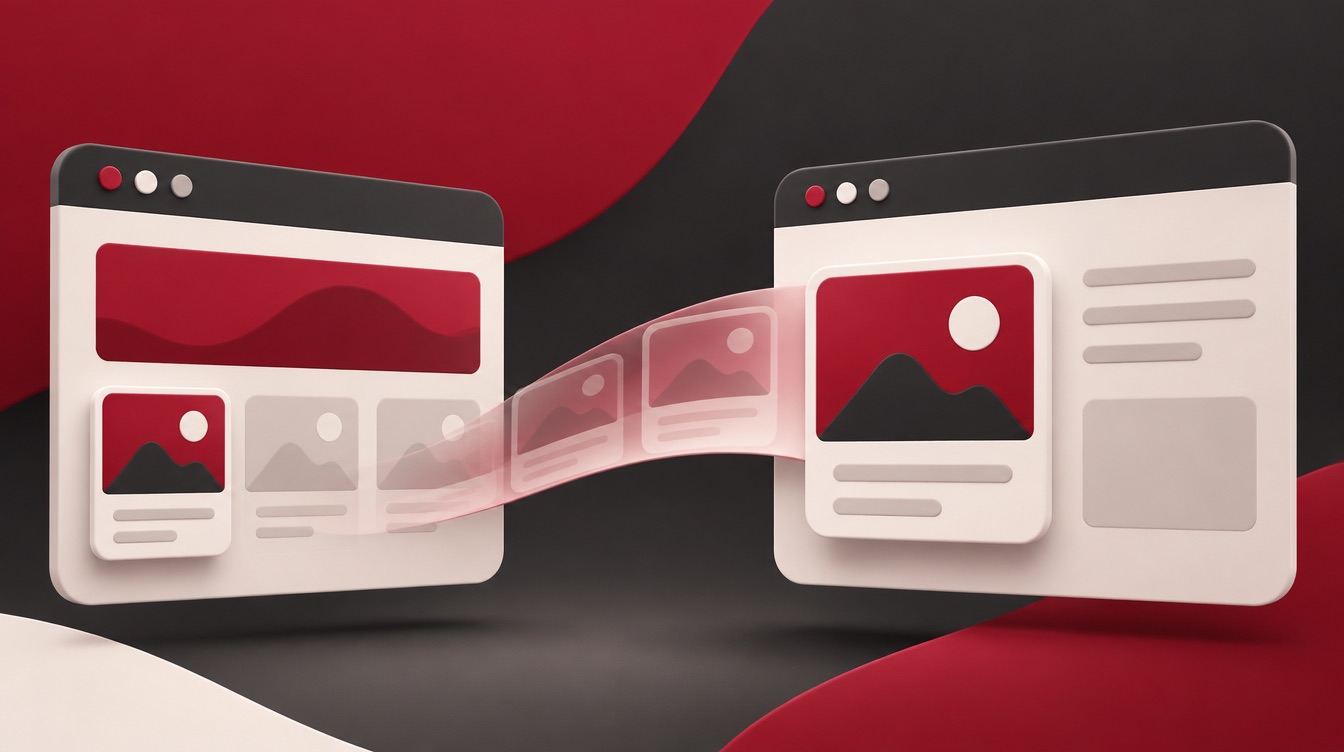
In web design, transitions between pages or interface states were long solved with heavy JavaScript libraries or intricate animation code. The View Transitions API hands that job to the browser itself, letting you define transitions in a few lines. In autumn 2025, with Firefox also supporting same-document transitions, the feature reached a point that the Baseline web-standards tracking project classifies as newly available.
What are View Transitions?
The API captures the state of the interface before and after a change and builds a transition between them. Developers can customise it with CSS: fades, slides, or letting a particular element move and resize smoothly between two states. For example, a list card can expand into a detail view while the same image travels naturally between the two.
Why it matters
- Support in all main engines: same-document transitions now work in Chromium-based browsers, Safari and Firefox, making the feature easier to use as progressive enhancement in mainstream projects.
- Less code: the need for custom animation libraries shrinks.
- Consistency: browser-managed transitions, used well, can approach a native-app feel.
Things to watch
Support for transitions across multiple pages is not equally mature in every browser, so check current support tables before starting. It is also advisable to treat the feature as progressive enhancement, so the page keeps working normally in browsers that lack it.
On the accessibility side, respect the prefers-reduced-motion setting for users sensitive to movement. Transitions should not be long or distracting; short, meaningful motion that helps people understand the structure of the content is better.
Takeaways for design teams
- Design transitions as context-setting tools rather than decoration: they should help users see what moved where.
- Define motion explicitly in prototypes and handoff notes.
- Test performance on real devices, especially mid-range phones.
This is part of a broader trend of the web platform gaining native motion capabilities. Because exact status and browser versions can change, we recommend checking up-to-date sources such as webstatus.dev before implementation.




